

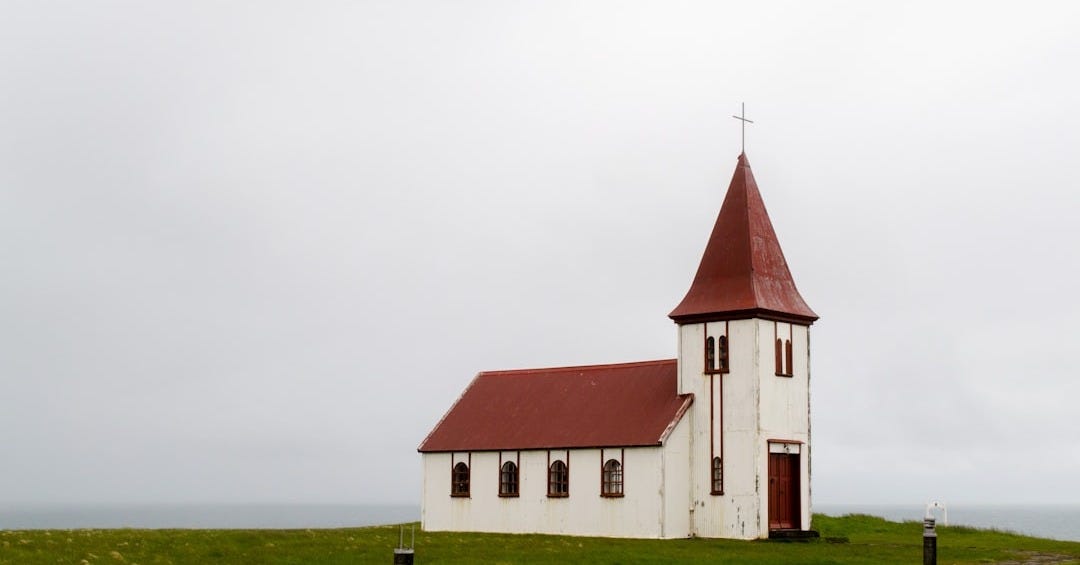
We want the Ozarks to be full of vibrant Reformed churches. That means churches that are biblically grounded and rooted in the historic confessional, Reformed tradition. Those are our first two values, which you can read about here and here. Along with those values, though, is the conviction that our churches must also be connected to one another. Contrary to the contemporary views and basic assumptions about church structure prevalent among Christians today, we affirm the necessity of connectional churches. That’s our third value that defines our project, and the focus of this article.
What Is a Connectional Church?
A connectional church is one that is formally connected to other churches through shared structure, government, and accountability. The clearest example of this are the many Christian denominations that exist today. In our case, our congregations are members of the Presbyterian Church in America (PCA), the largest conservative Presbyterian church in the United States.
But denominations are becoming less common. Recent work by Ryan Burge shows that non-denominationalism is the fastest growing pocket of Christianity in America. Those nation-wide statistics certainly pass the “eye test” as more and more independent churches with unconventional names pop up on street corners throughout the country.
Independent churches led by charismatic figures (or perhaps by a board of trustees) is certainly the trend. But is that the best way to run a church? Even for faithful churches that have biblical elders who oversee the congregation, yet still operate fully independently (i.e., congregationalist), is there not a better, more biblical way?
At Reforming the Ozarks, we believe there is, and that is why Connectional Churches is one of our core values. Churches have the best chance of success when they are connected to one another, and to the larger church. In this brief article, I want to argue for connectionalism in general, and the Presbyterian form of government specifically.
Is it Biblical?
First, we must always ask, is it biblical? It might sound good on paper, but what does Scripture say on this issue? When we examine the Scriptural record, we find the basic expectation that every church would have a plurality of elders, that those elders were entrusted with the oversight of their church, and that those churches and elders were accountable to one another.
A Plurality of Elders
One of the key tenets of Presbyterianism is that authority in the church is seated within a plurality of elders. This idea of plurality is biblical and is found in Paul’s life and ministry, both in the example he set as a church planter, and in his writings. Luke records Paul’s first missionary journey in Acts 13-14. Accompanied by Barnabas, the missionary team set out from Antioch and traveled by land and sea to several cities, preaching and facing persecution as God planted churches in each place they went. As they finished their first journey and prepared for their return to Antioch, Luke tells us that they “appointed elders for them in every church” (Acts 14:23). Before they left these churches on their own, they made sure each church had its own elders to shepherd and watch over them.
Many years later, Paul wrote to Titus to provide him instructions on how to serve and minister to the church. He begins this letter with qualifications for those holding the office of Elder, and he begins that section by saying “This is why I left you in Crete, so that you might put what remained into order, and appoint elders in every town as I directed you” (Titus 1:5, emphasis added).
In both places, the word for elder is plural. Both from Paul’s example as a missionary and church planter, and from his writing to a next generation church planter, we see the expectation of a plurality of elders in every church.
Local churches were never meant to be run by a single charismatic figure. Neither were they meant to be run like a business or even as another non-profit with a board of trustees. Rather, Scripture testifies to the unique office of elder, one filled by qualified men who will do the work together of shepherding and overseeing the church. That leads directly to another point worth exploring.
Elders Are Shepherds and Overseers
There are three different terms with overlapping meanings that Scripture uses to describe the singular office of elder. Elders are also referred to as pastors or shepherds and as bishops or overseers. These terms each show up several times throughout the New Testament, but in two places all three show up together, demonstrating their overlap in meaning.
In Acts 20:17-38, Paul gives a farewell speech to the elders of the church in Ephesus. In that speech, he charges them to “pay careful attention to yourselves and to all the flock, in which the Holy Spirit has made you overseers, to care for (grk. shepherd) the church of God, which he obtained with his own blood” (Acts 20:28). The Elders of Ephesus were made Overseers of their church by the Holy Spirit, and therefore must Shepherd the church that Christ purchased with his own blood.
Peter agrees with Paul’s understanding of this office when he writes in his first letter “So I exhort the elders among you, as a fellow elder and a witness of the sufferings of Christ…shepherd the flock of God that is among you, exercising oversight…” (1 Peter 5:1-2, emphasis added). The same three words show up here as well. Elders are Shepherds and Overseers.
Much more can be said about this office and how it has been understood by different church traditions. It will be sufficient for now, however, to simply acknowledge the importance of this office in the life of the church.
Even with all that said, we have not yet demonstrated the case that these churches should themselves be connected. All this proves thus far is that individual congregations should have a plurality of elders. But where do we see that these congregations aren’t independent, but interdependent? Let’s turn there now.
Interconnected
The main text we must consider is Acts 15 and the Jerusalem Council. At this point in the early church, many people have come to faith, including Gentiles. The question before the gathering of apostles and the elders (Acts 15:6) was how they should understand the Gentile conversion, and whether these believers must first become Jews before they can become Christians.
Of note for our purpose is not the decision that was reached by the council, but their expectation of what the churches must then do with that decision. After the council concluded its work, Paul began his second missionary journey, and he brought with him the decision the council reached. In that context, we read that as Paul’s missionary team “went on their way through the cities, they delivered to them for observance the decisions that had been reached by the apostles and elders who were in Jerusalem” (Acts 16:4, emphasis added). The expectation for all these individual churches throughout the world, separated by distance and distinct cultures, was that they would adhere to the decisions of that first church council. They were not independent, they were interconnected.
Taken together, these passages of Scripture demonstrate the necessity of a plurality of elders in every church, who function as overseers and shepherds, and who are connected and accountable to one another.
How Is it helpful?
Seeing that connectedness is biblical, it must therefore be helpful. Many ways can be listed but three get to the heart of our ministry in the Ozarks.
First, connectedness brings structure and stability. It is a wonderful blessing to share denominational resources with our sister congregations across the country. Perhaps the best example of this is in our foreign mission sending agency: Mission to the World. Imagine the difficulty each individual congregation would face if they tried to raise, fund, train, and send out missionaries all on their own. Instead, individual churches within our denomination are able to support the work of a central missions agency whose sole responsibility it is to send out missionaries across the globe.
Another great example is in the training of new ministers. We have structures, guidelines, and expectations in place for the level of training and competency men must have in order to enter the ministry. An individual church, or a small group of elders, are not left to figure that out all on their own. Many more examples could be given for the stability and structure provided by connectionalism.
A second way connectedness is beneficial to the church is the accountability and support it brings. This, of course, is closely related to the previous point. But here I think particularly of the kind of accountability that can be difficult at times to accept, but absolutely necessary for the well-being of the church.
One way this works in practice is through the pastoral search process. In the ordination and installation of new pastors, the local church does not have the final say on who they want to call to serve them. This is a good thing! In our denomination, the local church has the right to extend a call to a pastor, but the regional and governing Presbytery has the right and responsibility to examine that man to ensure he is qualified for the job. This is healthy, biblical accountability.
Moreover, if you’ve been in any church or any amount of time, you also know that churches aren’t perfect. Because there is accountability that extends beyond just the local congregation, members have access to a ‘court of appeals’ as it were to receive help during difficult times (e.g., when pastors and elders fall into sin, church splits, etc.).
The church isn’t perfect, neither are her pastors and elders. Therefore is it necessary for the wellbeing of the church to have accountability and safeguards in place to best care for the flock. Those structures are only found in connectional churches.
Finally, connectedness testifies to the unity and historicity of the church. As we’ve said many times before, the church did not start 20 minutes ago. One of the many dangers of purely independent, non-denominational churches is that they are not tethered to anything rooted in history or in church tradition.
In advocating for connectedness we do not desire a strict uniformity in all matters of worship and church life, but unity around biblical truth faithfully expressed in our shared confession. That grounds us in our shared history as a church, extending back to the founding of our nation, the Protestant Reformation of the 16th century, the medieval and early church, and all the way back to the apostles and prophets themselves, Christ Jesus being the cornerstone.
What a blessing and privilege it is to be able to trace our lineage on the church family tree and see how we fit into the larger, global, story of God calling, redeeming, building, and sanctifying his people, the church.
We invite you to become part of a rich church tradition. Far from impeding the work of Christ, we find connection with other like-minded churches to be essential in the work of reform and revival.